
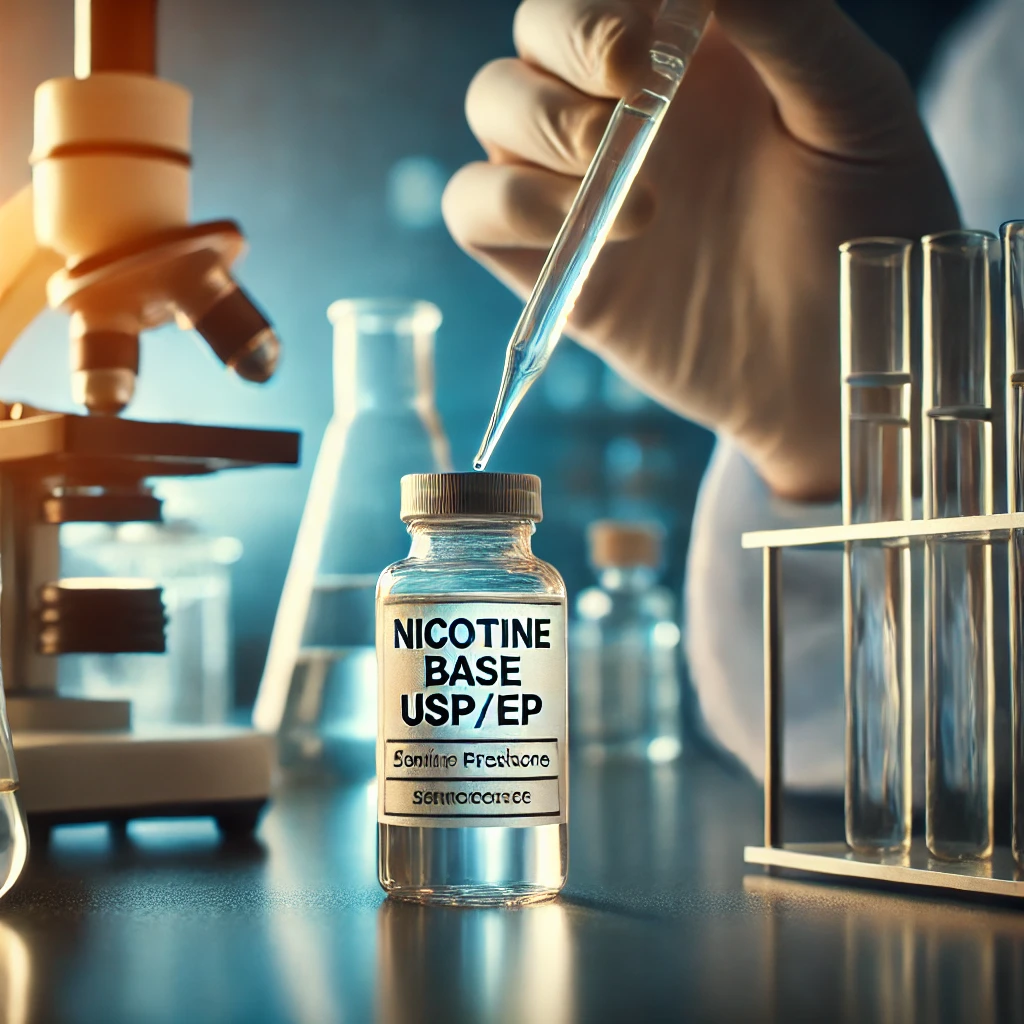
Nicotine base USP/EP is a highly concentrated form of nicotine that is used in a variety of pharmaceutical and consumer products. It is important that this product be manufactured to the highest quality standards in order to ensure its safety and consistency. Quality control (QC) is a set of processes and procedures that are used to ensure the quality of a product. In the context of nicotine base USP/EP manufacturing, QC includes a variety of activities, quality control is an essential part of nicotine base USP/EP manufacturing. By following strict QC procedures, manufacturers can help to ensure the safety, effectiveness, and consistency of their products. This can help to protect consumers, build brand reputation, and reduce the risk of product recalls.
Understanding Nicotine Base USP/EP
Nicotine base USP/EP is a highly concentrated form of nicotine that is used in a variety of pharmaceutical and consumer products. It is a clear, colourless liquid that is extracted from the tobacco leaf and manufactured to pharmaceutical standards.
Nicotine base USP/EP is used in a variety of products, including:
- E-cigarettes: Nicotine base USP/EP is the main ingredient in e-cigarettes. It is vaporised and inhaled, providing a nicotine fix without the harmful effects of tobacco smoke.
- Nicotine patches: Nicotine patches are a transdermal delivery system that delivers nicotine through the skin. They are used to help people quit smoking.
- Nicotine gum: Nicotine gum is a chewing gum that delivers nicotine through the lining of the mouth. It is also used to help people quit smoking.
- Nicotine lozenges: Nicotine lozenges are a solid form of nicotine that is dissolved in the mouth. They are also used to help people quit smoking.
- Nicotine nasal spray: Nicotine nasal spray is a liquid form of nicotine that is sprayed into the nose. It is used to help people quit smoking.
In addition to its use in pharmaceutical products, nicotine base USP/EP is also used in some consumer products, such as:
- Nicotine vaping liquids: Nicotine vaping liquids are used in electronic cigarettes and other vaping devices. They are made by diluting nicotine base USP/EP with a carrier liquid, such as propylene glycol or vegetable glycerin.
- Nicotine pouches: Nicotine pouches are a type of smokeless tobacco product that delivers nicotine through the lining of the mouth. They are made by placing a pouch of tobacco that contains nicotine base USP/EP between the cheek and gum.
The Manufacturing Process of Nicotine Base USP/EP
The manufacturing process of nicotine base USP/EP involves several steps, each of which plays a crucial role in ensuring the quality and purity of the final product. Quality control measures are implemented at various stages to maintain compliance with regulatory standards and to minimise impurities. Here is a step-by-step breakdown of the process:
Sourcing and Testing Raw Materials:
The process begins with the sourcing of raw materials, such as tobacco leaves or synthetic nicotine. These raw materials are subjected to rigorous testing to verify their quality, purity, and compliance with regulatory specifications.
- Extraction or Synthesis:
Depending on the chosen method, nicotine is either extracted from tobacco leaves or synthesized chemically. In the extraction process, the leaves undergo solvent extraction, followed by filtration and purification steps. In chemical synthesis, nicotine is created through specific chemical reactions.
- Purification:
After extraction or synthesis, the nicotine undergoes purification to remove impurities and unwanted compounds. Purification methods may include distillation, filtration, or chromatography. Quality control measures are implemented at this stage to ensure the removal of impurities and the achievement of the desired nicotine purity level.
- Dilution and Mixing:
Once purified, the nicotine is diluted to achieve the desired concentration, as per the specific requirements of the intended application. Dilution is often done using pharmaceutical-grade diluents or solvents. Quality control measures are crucial during dilution to ensure accurate nicotine concentration and to avoid any deviations.
- Quality Testing:
At various points throughout the manufacturing process, quality testing is conducted to assess the nicotine base USP/EP. This includes testing for nicotine concentration, pH level, specific gravity, residual solvents, impurities, and microbiological contaminants. Testing methods such as chromatography, spectrometry, and titration are employed to ensure compliance with quality control standards.
- Packaging and Labeling:
Once the nicotine base USP/EP has passed all quality control tests, it is packaged in appropriate containers, such as sealed bottles or drums, to ensure its integrity and protection. Accurate labeling is applied to indicate the nicotine concentration, batch number, manufacturing date, and any relevant safety information.
- Storage and Distribution:
Proper storage conditions are essential to maintain the quality and stability of nicotine base USP/EP. Adequate temperature, humidity, and light control are maintained during storage. Quality control measures continue to be implemented during distribution to ensure proper handling, transportation, and storage by adhering to good distribution practices.
Importance of Quality Control in Manufacturing
Quality control plays a pivotal role in manufacturing processes across various industries, including the production of nicotine base USP/EP. It encompasses a range of activities and measures implemented to ensure that products meet specific quality standards, comply with regulatory requirements, and satisfy customer expectations.
Product Integrity and Consistency: Quality control measures are implemented to ensure that products are manufactured consistently and adhere to predefined specifications. By monitoring and controlling various stages of production, such as sourcing of raw materials, manufacturing processes, and packaging, quality control helps maintain product integrity, minimising variations and defects.
Compliance with Regulatory Standards: Manufacturing industries are subject to a wide array of regulatory standards and guidelines that aim to protect consumer safety and ensure product quality. Quality control processes enable manufacturers to adhere to these standards by implementing checks, tests, and inspections to validate compliance. By meeting regulatory requirements, manufacturers avoid legal issues, penalties, and reputational damage.
Quality Control Standards for Nicotine Base USP/EP
When it comes to nicotine base USP/EP, specific quality control standards are in place to ensure its purity, safety, and compliance with regulatory requirements. Two widely recognized pharmacopoeias that provide guidelines for the quality control of nicotine base USP/EP are the United States Pharmacopeia (USP) and the European Pharmacopoeia (EP). Here’s an explanation of these standards:
United States Pharmacopeia (USP):
- The USP is a recognized compendium of quality standards for medicines, dietary supplements, and healthcare products in the United States. It sets forth quality control requirements and guidelines to ensure the identity, strength, purity, and quality of pharmaceutical substances and products.
- The USP monograph for nicotine base outlines the specifications and tests to determine its quality. These include requirements for nicotine content, residual solvents, impurities, pH value, specific gravity, and more.
- The USP also provides guidelines on the analytical methods and procedures to be employed in testing nicotine base, ensuring consistency and accuracy across different laboratories.
European Pharmacopoeia (EP):
- The EP is a reference work that provides legally binding quality standards for medicines and active pharmaceutical ingredients in European countries. It aims to ensure the quality, safety, and efficacy of medicinal products.
- The EP monograph for nicotine specifies the quality control tests and acceptance criteria for nicotine base. This includes requirements for nicotine content, impurities, residual solvents, water content, and pH value, among others.
- The EP also details the recommended analytical methods and procedures to be used in the testing of nicotine base, ensuring harmonization and comparability across European countries.
These pharmacopoeias serve as authoritative references for manufacturers, regulators, and laboratories involved in the production and testing of nicotine base USP/EP. Compliance with these standards helps ensure that nicotine base meets the required quality criteria, guarantees product safety, and allows for consistency and comparability across different batches and manufacturers.
Testing Methods for Nicotine Base USP/EP
Quality control for nicotine base USP/EP involves the use of various testing methods to ensure its purity, potency, and compliance with regulatory standards. These testing methods employ different analytical techniques to assess the characteristics of nicotine base. Here are some commonly used techniques in quality control:
Chromatography:
- High-Performance Liquid Chromatography (HPLC): HPLC is widely employed to determine the nicotine content and impurity profiles in nicotine base. It separates and quantifies different components based on their interaction with the stationary and mobile phases, allowing for accurate measurement of nicotine concentration and identification of impurities.
- Gas Chromatography (GC): GC is utilized to analyze volatile components and residual solvents in nicotine base. It separates compounds based on their volatility and utilizes detectors to measure their concentrations. GC can be coupled with mass spectrometry (GC-MS) for enhanced identification and characterization of compounds.
Spectrometry:
- UV-Visible Spectroscopy: UV-Visible spectroscopy is used to determine the nicotine concentration in the base by measuring the absorption of light at specific wavelengths. This technique relies on the principle that nicotine absorbs light in the UV-Visible range, allowing for quantitative analysis.
- Mass Spectrometry (MS): Mass spectrometry is employed for the identification and quantification of nicotine and its impurities. It provides information about the molecular weight, structure, and fragmentation pattern of compounds, aiding in the characterization of nicotine base and the detection of impurities.
Titration:
Acid-Base Titration: Acid-base titration methods are utilized to determine the nicotine content in nicotine base. A standardized acid solution is added to a known volume of the nicotine base until the endpoint is reached, indicating the completion of the reaction. The volume of the acid solution consumed is used to calculate the nicotine concentration.
Moisture Determination:
Karl Fischer Titration: Karl Fischer titration is commonly used to determine the water content in nicotine base. This method relies on a chemical reaction between water and Karl Fischer reagent, allowing for precise measurement of moisture content.
Microbiological Testing:
Microbiological testing is performed to assess the microbial contamination and ensure the absence of harmful microorganisms in nicotine base. Techniques such as plating, membrane filtration, and culture-based methods are employed to detect and quantify microbial colonies.
These are just a few examples of the testing methods utilised in quality control for nicotine base USP/EP. Manufacturers and laboratories may employ a combination of these techniques, depending on the specific requirements and regulations governing the production of nicotine base. It is crucial to follow the appropriate testing procedures outlined in the relevant pharmacopoeial monographs or regulatory guidelines to ensure accurate and reliable results.
Impurity Analysis and Control
Methods for Detection and Elimination of Impurities:
- Chromatographic Techniques: High-Performance Liquid Chromatography (HPLC) and Gas Chromatography (GC) are commonly used to detect and quantify impurities in nicotine base. These techniques separate and identify individual components, allowing for accurate determination of impurity levels.
- Spectroscopic Methods: UV-Visible spectroscopy and Mass Spectrometry (MS) can be employed to identify and characterize impurities in nicotine base. These techniques provide information about the molecular structure, weight, and fragmentation patterns of impurities, aiding in their detection and quantification.
- Filtration and Purification: Filtration techniques, such as membrane filtration and activated carbon filtration, can be employed to remove particulate impurities from nicotine base. Purification processes, such as distillation and chromatography, may also be utilized to eliminate impurities and improve the purity of the product.
- Process Optimization: Controlling impurities starts with optimizing the manufacturing processes. Factors such as temperature, time, pH, and solvent selection can be adjusted to minimize impurity formation during extraction, synthesis, and purification processes.
- Raw Material Control: Proper selection and testing of raw materials are essential to prevent impurities from entering the manufacturing process. Rigorous testing of tobacco leaves or synthetic nicotine for impurities and compliance with quality standards are crucial steps in controlling impurities.
By implementing appropriate detection methods, employing purification techniques, and optimizing manufacturing processes, manufacturers can effectively identify and control impurities in nicotine base USP/EP. This ensures product safety, regulatory compliance, and the production of high-quality nicotine base.
Equipment Calibration and Maintenance
Regular calibration and maintenance of manufacturing equipment play a crucial role in ensuring accurate and consistent production of nicotine base USP/EP. The significance of these activities can be described as follows:
Accurate Measurements: Calibration of equipment ensures that measurements and readings provided by instruments used in the manufacturing process are accurate. This accuracy is essential for determining the precise nicotine concentration, monitoring process parameters, and complying with regulatory standards. Regular calibration guarantees that the equipment is operating within specified tolerances, providing reliable and trustworthy data.
Consistency in Production: Maintaining equipment in optimal condition helps ensure consistent performance and process conditions. This consistency is vital in manufacturing nicotine base USP/EP, as it ensures that the desired nicotine concentration, impurity levels, and other quality parameters are consistently achieved from batch to batch. By minimizing batch-to-batch variations, regular calibration and maintenance ensure uniformity and reliability of the final product.
Regulatory Compliance: Regulatory standards often require regular calibration and maintenance of critical manufacturing equipment. Compliance with these standards is necessary to demonstrate the reliability and traceability of the manufacturing process. Regular calibration and maintenance ensure accuracy, reliability, and adherence to quality control standards, facilitating regulatory audits and approvals.
Documentation and Record-Keeping
Maintaining comprehensive documentation and record-keeping practices throughout the manufacturing process is of utmost importance in the production of nicotine base USP/EP. The significance of these practices can be emphasized as follows:
- Traceability: Documentation and record-keeping enable traceability throughout the manufacturing process. By documenting crucial information such as batch numbers, raw material sources, manufacturing dates, and process parameters, manufacturers can track and trace each step of the production cycle. This traceability is vital for identifying the origin of materials, detecting potential issues or deviations, and facilitating product recalls or investigations if necessary.
- Quality Control: Comprehensive documentation plays a pivotal role in quality control. It allows manufacturers to record and track quality control tests, calibration records, equipment maintenance, and any deviations from standard operating procedures. By maintaining detailed records, manufacturers can monitor the quality of nicotine base at each stage of production, identify trends or patterns, and take corrective actions to maintain consistency and meet regulatory requirements.
- Regulatory Compliance: Documentation and record-keeping practices are essential for regulatory compliance. Regulatory bodies, such as the United States Pharmacopeia (USP) and the European Pharmacopoeia (EP), often require manufacturers to maintain detailed records of manufacturing processes, quality control tests, and product specifications. Accurate and comprehensive documentation ensures that manufacturers can demonstrate compliance with regulatory standards during inspections, audits, or when seeking approvals for their products.
The Impact of Quality Control on Product Safety and Consumer Confidence
Effective quality control measures have a direct and significant impact on product safety, reliability, and consumer confidence in nicotine base USP/EP. The relationship between quality control and customer trust and loyalty can be discussed as follows:
- Product Safety: Quality control measures ensure that nicotine base is free from harmful impurities and meets stringent safety standards. By implementing rigorous testing and inspection processes, manufacturers can identify and eliminate potential risks to consumer health. This commitment to product safety instills confidence in customers, assuring them that the nicotine base they are using is safe and reliable.
- Consistent Product Quality: Quality control measures help maintain consistent product quality, ensuring that each batch of nicotine base meets the specified standards and desired characteristics. By conducting thorough testing for nicotine content, impurity levels, and other quality parameters, manufacturers can minimize batch-to-batch variations. Consistency in product quality builds trust among customers, as they can rely on the nicotine base to deliver the expected performance and experience consistently.
- Regulatory Compliance: Implementing robust quality control measures ensures compliance with regulatory standards and guidelines set by organizations such as the USP and EP. Adhering to these standards demonstrates the manufacturer’s commitment to producing nicotine base that meets strict quality requirements. Compliance with regulatory standards not only ensures product safety but also enhances consumer confidence by assuring customers that the product has undergone rigorous testing and meets recognized industry benchmarks.
- Enhanced Reliability: Effective quality control measures contribute to the overall reliability of nicotine base. By implementing regular calibration and maintenance of equipment, conducting comprehensive testing, and following standardized procedures, manufacturers can minimize the occurrence of errors, deviations, or defects. Reliability instills confidence in customers, as they can trust that the nicotine base they purchase will perform consistently and meet their expectations.
- Customer Satisfaction and Loyalty: When customers have confidence in the safety, quality, and reliability of nicotine base, it leads to increased satisfaction and loyalty. Effective quality control measures ensure that customers receive a product that consistently meets their needs and expectations. Satisfied customers are more likely to become repeat customers and recommend the product to others, fostering loyalty and positive word-of-mouth promotion.
Explore Our Products: https://monir12.svalphawp.com/products/
Follow us on:
Facebook: https://www.facebook.com/profile.php?id=61559713707912&is_tour_dismissed
Twitter: https://x.com/prismindltd
Linkedin: https://www.linkedin.com/in/prism-industries-589771309/
Instagram : https://www.instagram.com/prism2241/